


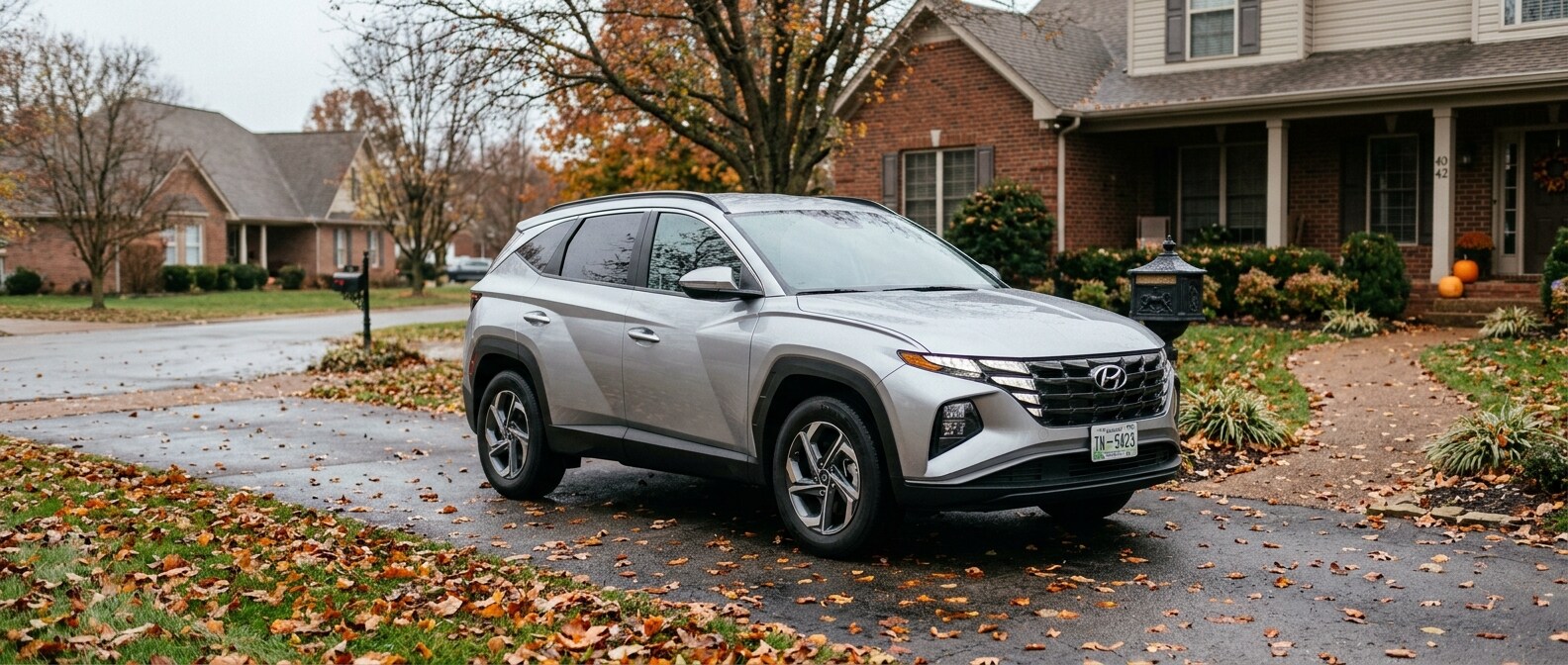
November in Hendersonville is deceptively hard on a car. Overnight lows keep flirting with the upper 30s while afternoon highs still climb into the upper 50s, and that roughly 20-degree daily swing is enough to drop your tire pressure by 2 PSI before you've poured your first cup of coffee. Add 10 or more rainy days, the daily run up and down the Nashville corridor, and the quiet reality that borderline batteries get harder to start every week as cold settles in, and you've got a real case for running this list now. Do it this week and you're set for the season.
Our team at Hallmark Hyundai Hendersonville can run through every item on this checklist in a single service visit, or you can knock out the driveway checks yourself and bring us what you find.
What Goes on the November Checklist?
The list pulls from Hyundai's factory service intervals and bends them toward the conditions Hendersonville drivers actually face in November, so most of it is standard guidance with a seasonal edge. Work through it in order. The first three items need nothing but a cold engine and two minutes in the driveway.
- [ ] Engine oil level and interval status. Pull the dipstick and confirm where you sit relative to your last oil change. Hyundai's Normal schedule calls for a change every 8,000 miles or 12 months using full synthetic oil rated API SN PLUS or above. That's the headline number. What it leaves out is that frequent cold starts, sustained stop-and-go segments on the way into Nashville, and short average trip distances can shift you onto the Severe schedule instead, which shortens the interval to every 5,000 miles or 6 months. November gives you a fair moment to check which one actually applies to you.
- [ ] Tire pressure (cold, before first drive of the day). Check against the PSI spec on your driver-door jamb sticker rather than the number on the tire sidewall. The sidewall number is the maximum the tire can hold. The door-jamb number is what Hyundai's engineers spec for your vehicle. Do this before the car has moved, because heat from driving raises the reading and can mask a real shortfall by 2 to 4 PSI.
- [ ] 12V battery load test. A battery that starts the car reliably in September can struggle by December. Cold temperatures reduce available cranking capacity, and a battery that's quietly degraded by a summer of heat is at its most vulnerable when cold arrives. If the battery's more than three years old or starts feel slower than they used to, get it tested now rather than on a cold morning in December.
- [ ] Cabin air filter inspection. Hyundai's schedule calls for inspection at regular service intervals and replacement on the alternating ones. Annual replacement is a solid rule of thumb for most driving patterns. The November reason matters. The defroster pushes air through the cabin filter before it reaches the windshield, so a filter clogged with a full season of pollen, road dust, and debris restricts that airflow and leaves your defroster slower to clear the glass on cold, damp mornings. It isn't an air-quality issue. It's a visibility one.
- [ ] Wiper blades. Run each blade slowly across a wet windshield and watch for chattering, streaking, or gaps. Hendersonville logs more than 10 rainy days in November on average. A blade that smears at highway speed on a gray morning is an easy problem to prevent and an annoying one to live with. Inspect once a year, and swap them the moment they're failing.
- [ ] Washer fluid level and freeze rating. Top off with a fluid rated for below-freezing temperatures. A summer blend can freeze in the reservoir lines once overnight lows hold steady in the 30s. Call it a small thing. Skip it and you'll think about it at the worst possible moment.
- [ ] Coolant level (cold engine only). Check the overflow reservoir before the engine has run that day. The level should sit between the MIN and MAX marks. If it's low, don't add plain water. Bring it in and let us confirm what the system needs.
- [ ] Exterior lights. Walk around the car and confirm all running lights, brake lights, and turn signals are working. November's shorter days put you on the road in low-light conditions more than any other fall month, and a burned-out brake light is genuinely invisible from inside the cabin.
Why These Items Hit Differently This Month
Most of this checklist is standard Hyundai service guidance that holds true any month of the year, but November sharpens a handful of items because the cold, the rain, and the Nashville commute all pile on at once. Three of them deserve a closer look.
The Normal versus Severe schedule question is worth sorting out before winter settles in. The gap between them is real and specific (7,500 miles versus 5,000 miles). For Tucson Hybrid drivers making the daily Nashville run, the commute pattern often fits Hyundai's Severe conditions criteria without feeling severe. Cold-start short trips, repeated stop-and-go highway segments, and consistent idling in traffic all count. If that describes your morning, the standard 7,500-mile interval isn't conservative enough for how the car's actually being used.
Batteries deserve a paragraph of their own. Tennessee summers are genuinely hard on 12V batteries. Heat accelerates the internal degradation that cold weather then exposes. By November, a battery that's been quietly losing capacity since June is facing its hardest conditions right now. It costs nothing to have it tested. Finding out it's at 60 percent capacity in the service bay this week beats finding out in a parking garage on a Wednesday morning in January.
The defroster connection is easy to miss. Santa Fe Hybrid owners with dual-zone climate control notice it first. The rear defroster adds airflow demand, and when the cabin filter's clogged, the system just can't move enough air to clear the glass fast. It's not a heater problem or a defroster element problem. New filter, full airflow, problem solved.
Service tip: If you're unsure whether your commute qualifies as Severe use, try this working rule. A one-way trip under 30 minutes that includes multiple traffic signals probably qualifies. Bring your last service record to the visit and we'll confirm the schedule that fits your actual driving pattern.
| Checklist Item | Why It Matters in Hendersonville This November |
|---|---|
| Oil level and interval | Cold-start commutes toward Nashville may qualify for Severe service (5,000-mile interval) |
| Tire pressure, cold | A 20-degree daily temperature swing equals roughly 2 PSI of overnight pressure loss |
| 12V battery | Summer heat degrades capacity; cold reveals it; test before the first hard freeze |
| Cabin air filter | Restricted airflow directly limits defroster output on cold, damp mornings |
| Wiper blades | 10+ rainy November days; streaking at highway speed is worth solving now |
| Washer fluid | Summer blends freeze in lines once overnight temps hold in the mid-to-low 30s |
| Coolant level | Cold engine check only; confirms the system is healthy before December |
| Exterior lights | Shorter days mean more low-light driving; two-minute walk-around catches it |
Your Print-and-Go November Recap
The full list sits here in one place, ready to print, so you can run through every driveway item before December arrives and bring us the rest.
Driveway checks (before you call us):
- [ ] Oil dipstick: level confirmed in range, interval status known
- [ ] Tire pressure: each tire checked cold against door-jamb spec
- [ ] Washer fluid: topped off with freeze-rated formula
- [ ] Coolant overflow reservoir: between MIN and MAX, cold engine
- [ ] Exterior lights: all running lights, brakes, and turn signals confirmed
Bring to us at your service visit:
- [ ] 12V battery load test
- [ ] Cabin air filter inspection and replacement if at or past interval
- [ ] Wiper blade inspection and replacement if chattering or streaking
- [ ] Oil change if due, with Normal vs. Severe schedule confirmed for your commute
If the summer service visit never happened, combine the oil change, tire rotation, battery test, and cabin filter into one appointment now. Everything here is part of our standard multi-point inspection. One visit takes care of the season. Our new Hyundai inventory is here if the checklist reminded you that the current car's been asking for attention more than it should.
Frequently Asked Questions
Does the Normal or Severe maintenance schedule apply to my Hyundai if I commute to Nashville?
For a 25-to-30-minute one-way commute into Nashville, the Severe schedule is usually the closer fit. Hyundai's Severe conditions definition includes frequent cold starts, sustained stop-and-go driving, and trips where the engine may not fully reach operating temperature before you arrive. A morning commute that covers those three patterns on most days qualifies. Under Severe conditions, the recommended oil change interval drops from 8,000 miles or 12 months to 5,000 miles or 6 months. If you're not sure which schedule applies to your car, bring your last service record to your next visit and we'll walk through it with you.
Why does my Hyundai's TPMS light come on in November when the tires look fine?
The temperature swing is the cause. Tire pressure drops by roughly 1 PSI for every 10-degree Fahrenheit drop in ambient temperature. Hendersonville's November mornings can run 15 to 20 degrees colder than the afternoon before, which is enough to trigger the Tire Pressure Monitoring System on tires that were correctly inflated the previous day. The fix is straightforward. Check each tire cold in the morning against the PSI spec on your driver-door jamb sticker and inflate to that number. The light should clear once pressures are set. If it stays on after that, bring the car in so we can inspect for a slow leak or a sensor issue.
Categories:
Social


