

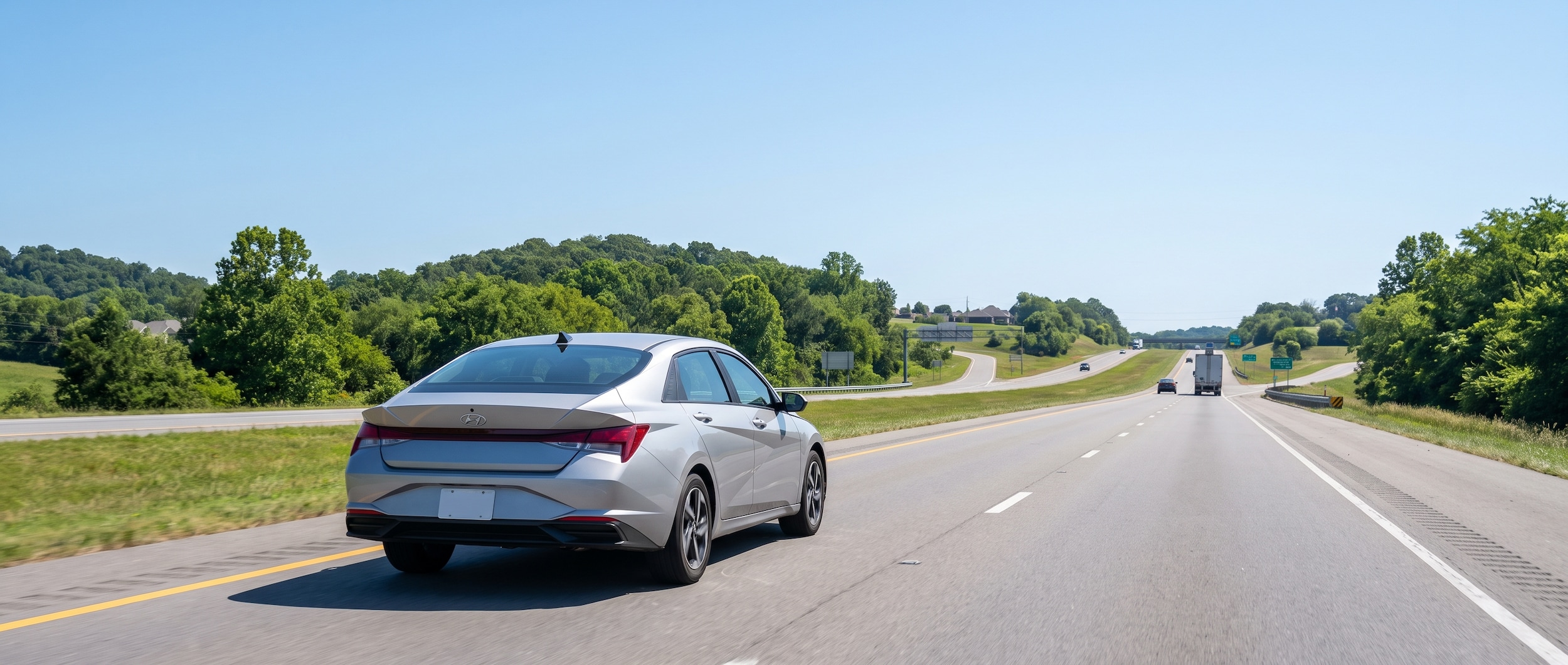
The 2026 Hyundai Elantra is well-matched to the Hendersonville-to-Nashville commute, but Highway 386 -- Vietnam Veterans Boulevard -- has a handful of conditions that reward a deliberate approach in July. The controlled-access corridor carries nearly 85,000 vehicles per day near its I-65 junction, according to Tennessee Department of Transportation traffic counts, and narrows quickly at a sharp curve near US 31E that TDOT has formally flagged for safety improvements. Add summer sun glare on an east-facing morning run and the construction-season traffic that builds every July, and you have a route where the Elantra's standard SmartSense safety suite stops being background tech and starts earning its keep every day.
The short answer: the Elantra's forward collision assist, blind-spot warning, lane-keeping assist, and driver attention warning are standard on every 2026 trim -- meaning the car is ready for this road even in base SE form. Your job is to use those systems correctly and pair them with a few summer-specific habits.
What to Do -- and What to Skip -- on 386 This Summer
The table below pairs the real hazards of SR 386's summer commute with what the Elantra supports, and where you still carry the responsibility yourself.
| SR 386 Condition | Do This | Avoid This |
|---|---|---|
| I-65 merge (up to 70 mph posted) | Increase following distance to 3+ seconds; let SmartSense FCA monitor ahead | Riding bumpers at merge; the radar needs a clear sight line |
| US 31E curve (posted speed reduction to 65 mph) | Lift slightly before the curve; Lane Keeping Assist steadies your lane position | Entering the curve at merge speed; the posted reduction exists for a reason |
| Morning sun glare (east-facing on outbound AM runs) | Clean windshield the night before; polarized sunglasses on the seat | Assuming High Beam Assist handles daytime glare -- it only manages headlights, not solar angle |
| Summer construction zones | Add a second of following distance; watch for sudden slowdowns signaled by FCA alert | Using Smart Cruise Control through an active work zone at high speed |
| Heat-related driver fatigue | Accept the Driver Attention Warning prompt to rest; it monitors steering patterns | Dismissing the alert and pushing through a long commute in peak afternoon heat |
The One Technique That Pays Off Most: Proactive Following Distance
The merge where SR 386 meets I-65 is the stretch that accounts for most of the corridor's documented incidents, and every documented summer commute guide for this area flags it as the primary caution zone. The physics are simple: at 65 to 70 mph, stopping distance in good conditions already stretches past 250 feet, and summer heat on pavement marginally increases tire response time.
The Elantra's Forward Collision-Avoidance Assist -- standard across all 2026 trims per Hyundai's published SmartSense specification -- provides an audible alert and can apply emergency braking support, but the system is most effective when you give it room to work. Here is the practical sequence for that merge:
- Check your blind-spot indicator lights before moving left toward the I-65 interchange. The Blind-Spot Collision Warning activates the amber mirror indicator automatically; if it is lit, hold your lane for one additional beat.
- Release cruise control before the merge point if you are running Smart Cruise Control (available on SEL Sport Premium and Limited trims). The transition from controlled-access to the I-65 ramp is not a good zone for adaptive cruise to be managing speed decisions alone.
- Open a three-second gap to the vehicle ahead. Count a fixed marker -- a sign post, an overpass shadow -- and make sure three full seconds pass between their bumper clearing it and yours.
- Scan the US 31E curve early. Approaching from the west, the curve is visible a few hundred feet out. Lane Following Assist will provide gentle centering input, but your visual check ahead of the bend tells the system what you already know.
- Accept the Driver Attention Warning when it comes. On a 25-minute morning commute in July heat, the system's fatigue alert -- which monitors steering correction patterns over time -- is calibrated for real-world driving, not just marathon trips. If it prompts you after a long inbound run, a two-minute rest stop off Green Lea Boulevard is a rational choice.
Commute note. The IIHS awarded the 2026 Hyundai Elantra its TOP SAFETY PICK+ rating, its highest designation, when equipped with specific headlights. That recognition reflects real-world crash-test performance, not just the feature list -- and it matters most on high-density corridors like 386 where incidents, when they happen, involve multiple vehicles.
A Practical Recap Before You Leave the Driveway
SR 386 is a well-designed commuter highway, and the 2026 Elantra is genuinely well-suited to it. The standard EPA-estimated 40 mpg highway on the SE trim means the daily run costs less than many commuters expect. The Elantra N is the performance-focused sibling worth knowing about for drivers who want a sharper dynamic feel on the same road, while the current Hendersonville inventory shows which trims and configurations are available now.
One pre-drive habit ties everything together this summer: a clean windshield, confirmed tire pressure (per NHTSA guidance, tire pressure should be checked before highway driving -- hot pavement and summer heat cause pressure to fluctuate), and a quick Driver Attention Warning calibration check at startup. The Elantra handles the monitoring. You handle the preparation.
A seasonal service check before the summer commute season peaks -- A/C performance, cabin air filter, tire pressure -- keeps everything the Elantra monitors working at its best.
Categories:
Social


