


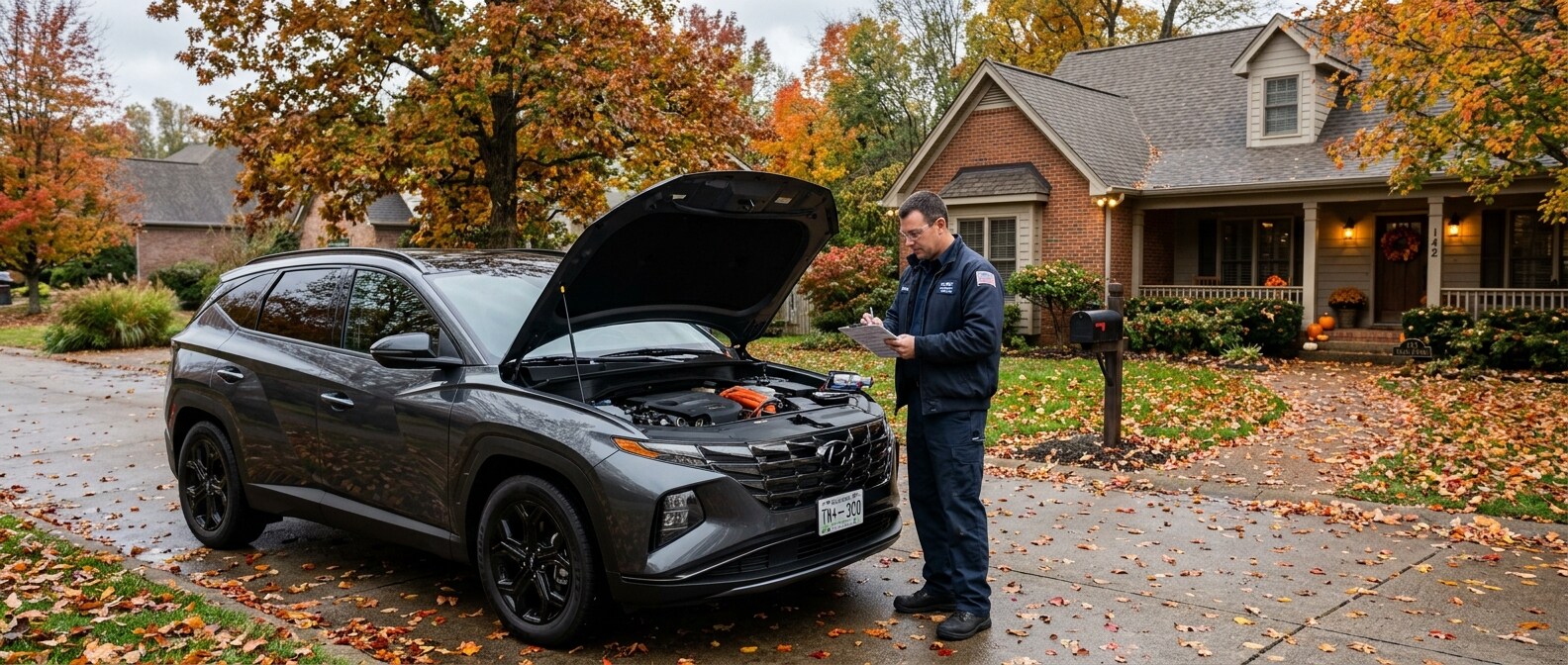
Thanksgiving 2026 falls on November 26, and AAA projects over 1.92 million Tennesseans will travel at least 50 miles from home. More than 1.84 million of them by road. None of that is cause for panic. The point of the exercise is to spend one morning this week making sure your Hyundai isn't the reason you're on the shoulder of I-65 instead of pulling into the driveway you were headed for.
A focused pre-trip inspection runs about an hour at the dealership, and it covers the five things that actually cause unplanned roadside stops. Below is exactly what to check, and why the specifics matter for the way Hendersonville drivers really use their vehicles.
Schedule your pre-travel service at Hallmark Hyundai Hendersonville
What Goes on the Pre-Trip Checklist?
The pre-trip checklist comes down to ten items, and most of them you can clear right in your own driveway, while the battery load test, brake fluid condition, and oil service are the three that belong with a technician before you leave town. Print it, then check the boxes before you load the car.
- [ ] Cold tire pressure check, with a gauge, before you drive, against the door-jamb placard (not the number on the sidewall)
- [ ] Tire tread depth inspection. Visual check on all four corners, spare included if your model carries one
- [ ] 12V battery load test, especially if the battery is more than three years old
- [ ] Engine oil level and condition. Dipstick pull, check color and level; note where you are against your service interval
- [ ] Brake fluid condition. Color check or moisture strip test; Hyundai specifies service every 30,000 miles or two years, whichever comes first
- [ ] Coolant level. Reservoir visual check with the engine cold
- [ ] Windshield washer fluid. Top off with a freeze-rated formula now that overnight lows are dipping below 40 degrees Fahrenheit
- [ ] Wiper blade function. Run a test cycle; replace if they streak
- [ ] All exterior lights. Headlights, brake lights, reverse lights, turn signals
- [ ] Cabin air filter visual, especially relevant if you've run with the heat on lately
Ten items, and that's the complete list. You can handle the visual checks in your driveway, while the battery load test, brake fluid condition, and oil service belong with a technician.
Why These Items Actually Matter for Hendersonville Drivers
A generic road-trip checklist reads the same in every state, but this one is built for Hendersonville, where the cool-season temperature swings and a stop-and-go Nashville-corridor commute load a specific kind of stress onto your tires, oil, and brakes through November.
Tires: the November temperature swing is the story.
According to NHTSA, a tire can lose around one PSI for every 10-degree Fahrenheit drop in temperature. Average temperatures in Hendersonville in November range from a high of 59 degrees Fahrenheit down to a low of 38 degrees Fahrenheit, a swing of about 20 degrees over a single day. So your tires can quietly shed two PSI between the afternoon you last checked them and the cold Tuesday morning you plan to leave. You won't feel it steering out of the neighborhood, but the TPMS light will catch you on the ramp. The trip starts wrong.
Check cold pressure the morning before your departure, not the afternoon before. Match the door-jamb placard, not the maximum number molded into the tire sidewall.
If you drive a Tucson Hybrid, that TPMS check is especially worth doing. The Tucson Hybrid carries a specific recommended pressure that may differ by trim from the gas version, and the placard is the only authoritative number.
Oil: Normal vs. Severe schedule is the question most drivers skip.
Hyundai publishes two maintenance tracks. Under the Normal schedule, most 2026 Hyundai models require an oil change every 7,500 miles or every 6 to 12 months. Under the Severe schedule, that interval shortens to every 5,000 miles or every 6 months.
The part that catches people is the commute itself. Driving the Nashville corridor with frequent stop-and-go segments, short cold-start trips, or regular traffic on 386 qualifies as Severe use under Hyundai's own definition. If you've been running the 7,500-mile interval because that's the number you remember, but your commute pattern actually fits Severe, your oil may be further past its real service point than the odometer suggests.
Call our service team before you go.
Brake fluid: the item nobody thinks about until it's too late.
Brake fluid should be replaced every 30,000 miles or two years, whichever comes first. Brake fluid absorbs moisture over time (it's hygroscopic), and as the moisture builds the boiling point drops, which affects pedal firmness during extended downhill stretches or repeated braking in heavy pre-holiday traffic on I-65. Past the two-year mark, Thanksgiving week is exactly the wrong time to find that out.
Santa Fe Hybrid owners should note that the hybrid system's regenerative braking reduces how often the friction brakes engage in everyday driving, which is good for pad longevity. The fluid still absorbs moisture on the same timeline, though, so the time-based service interval holds regardless.
Battery: cold mornings accelerate what age already started.
A battery that's been borderline all summer often shows its true condition in the first real cold snap of fall. At 38 degrees Fahrenheit, a weakened battery delivers noticeably less cold cranking amps than it does at 70 degrees Fahrenheit. If yours is approaching three to four years old, a load test before the trip costs less than a jump-start in a parking lot four hours from home.
For hybrid models (Tucson Hybrid, Santa Fe Hybrid, Palisade Hybrid, Sonata Hybrid): your 12V auxiliary battery still matters. The high-voltage hybrid battery runs its own management system, but the 12V is what wakes the car up. Have both checked.
Item / Why It Matters for Hendersonville Thanksgiving Travel
| Checklist Item | Why It Matters Here |
|---|---|
| Cold tire pressure | November temp swings of about 20 degrees Fahrenheit mean up to 2 PSI can drop overnight; TPMS warning on departure morning is avoidable |
| Oil level and interval check | Hendersonville commuters may qualify for Hyundai's Severe schedule (5,000-mile interval), not the Normal 7,500-mile one |
| Brake fluid condition | Hyundai specifies service every 30,000 miles or 2 years; moisture absorption affects pedal feel on extended downhill runs |
| 12V battery load test | Cold mornings reduce available cranking amps; a borderline battery from summer shows its condition in November |
| Wiper blades + washer fluid | Freeze-rated fluid matters once overnight lows hit the upper 30s; streaking wipers on a gray November highway are a real nuisance |
| Cabin air filter | A clogged filter reduces defrost airflow, which matters most on cold, damp mornings |
Your Print-and-Go Pre-Thanksgiving Recap
AAA reminds drivers to check their vehicles' tires, batteries, and fluids before leaving for Thanksgiving, and our team would add brake fluid and your maintenance schedule track to that same list before you point the car toward the interstate. Run this sequence before the week of November 24.
- This week: Schedule a multi-point inspection with tire pressure and tread check, oil service if due, brake fluid condition test, and battery load test
- Night before departure: Top off washer fluid, test all lights, confirm tire pressure one more time (cold, before driving)
- Morning of: Give the TPMS display a glance before you leave the driveway
One appointment covers most of it. INRIX expects Tuesday and Wednesday before Thanksgiving to be the busiest departure days. Schedule your service this week, not the Monday before, so you've got a cushion if anything needs attention.
If you're taking a Palisade loaded with the whole family and gear, the multi-point inspection matters even more. Heavier loads change braking behavior and put more demand on tires, so starting with verified pressure and confirmed pad thickness is time well spent.
Schedule Your Pre-Thanksgiving Service
Frequently Asked Questions
Does my Hyundai hybrid need a brake inspection before a road trip, even though regenerative braking reduces wear?
Yes. Regenerative braking does reduce friction brake engagement in everyday driving, which really extends pad life compared to a conventional vehicle. What it doesn't change is brake fluid service timing. Hyundai recommends brake fluid replacement every 30,000 miles or two years, whichever comes first, and that interval applies to hybrid models the same as gas models. If your fluid is past the two-year mark, have it tested before your trip regardless of how fresh the pads look.
My TPMS light came on this week but my tires look fine. Do I actually need to add air?
Probably, yes. For every 10-degree drop in temperature, your tires can lose about 1 PSI. When Hendersonville nights dip into the upper 30s, a tire that was set correctly in September can easily fall below the threshold that triggers your TPMS warning. Add air to the pressure on your door-jamb placard (not the sidewall number), do it when the tires are cold (the car hasn't moved in at least three hours), and the light should clear. If it comes back within a day or two of normal driving, have the tires inspected for a slow leak.
Categories:
Social


