


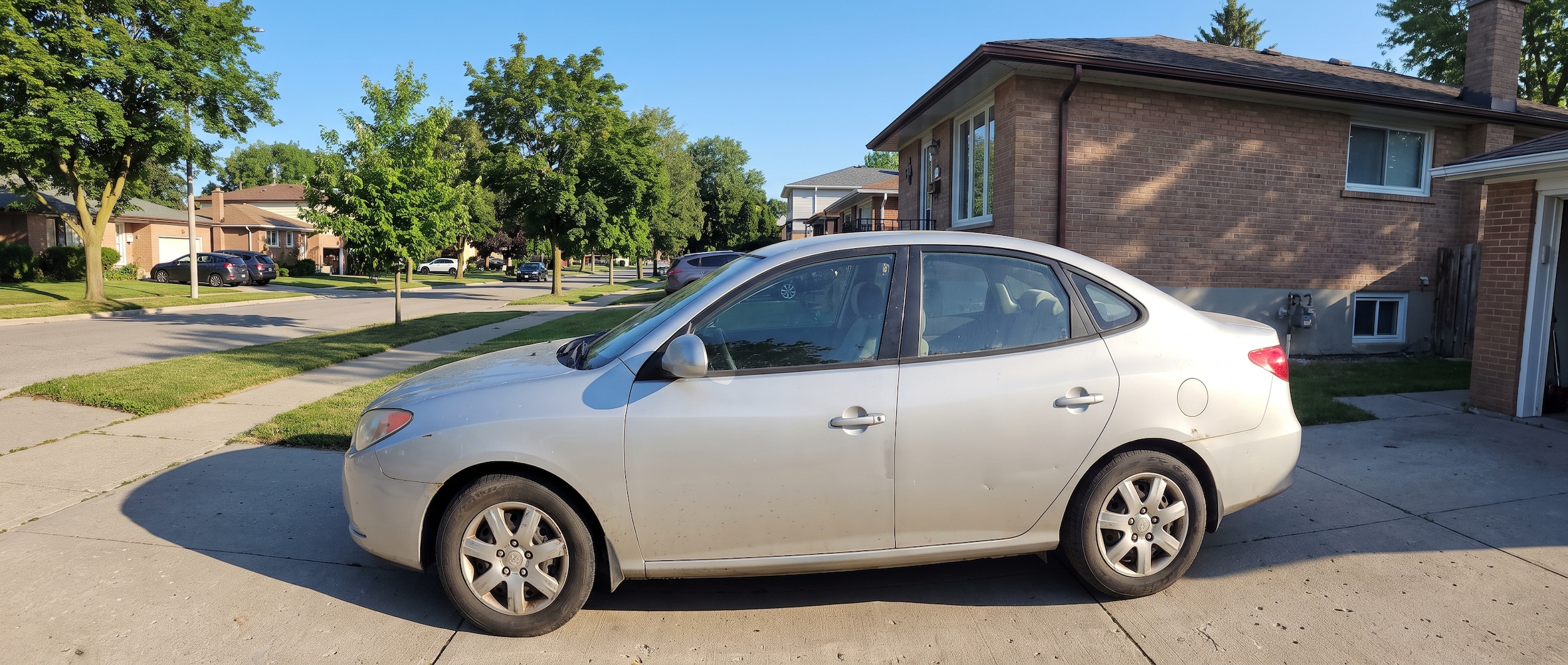
The single biggest mistake in used Hyundai shopping is treating all years within the same model as interchangeable. A 2019 Elantra and a 2017 Elantra share a name and a silhouette -- but their ownership histories are meaningfully different. The same split applies to the Sonata and the Tucson, where a manufacturing defect in the Theta II engine defined an entire era and still shapes which years make smart buys today.
If you are commuting from Goodlettsville or Hendersonville into Nashville, you are most likely logging 25-45 miles each way on I-65, and the fuel economy and reliability math matters every single week. This guide breaks down the Elantra, Sonata, and Tucson by model-year range, so you know which windows to target and which ones to walk past.
Browse the current used Hyundai inventory at Hallmark Hyundai Hendersonville
The short version
- Elantra sweet spot: 2019-2022 -- the 2019 earned Consumer Reports' "Recommended" badge; the 2020 pushed EPA-estimated highway fuel economy to 41 mpg; the 2021 redesign brought a larger cabin and standard engine immobilizer.
- Elantra to watch: 2012-2013 (documented engine complaints) and early 2017 (first-year dual-clutch hesitation).
- Sonata sweet spot: 2020-2023 -- the 8th generation sidestepped both the Theta II engine recall and the easy-theft vulnerability of earlier models.
- Sonata years to approach carefully: 2011-2014 (Theta II recall vehicles -- confirm the KSDS software update before buying); 2011 in particular accumulated thousands of NHTSA complaints.
- Tucson sweet spot: 2019-2021 -- the 2021 leads all Tucson model years with a 78/100 NHTSA-data reliability score.
- Tucson to skip: 2016-2017 (dual-clutch transmission recall; highest complaint volumes in the nameplate's history).
- Universal rule: Run the VIN at nhtsa.gov before signing anything.
Which Elantra years hit the reliability sweet spot?
The 2019 Hyundai Elantra was the first in its generation to earn Consumer Reports' "Recommended" designation, a mark the prior two model years (2017 and 2018) could not claim. That distinction tracks with NHTSA data: the 2019 carries one recall and 195 owner complaints on record -- a low count for a car now several years into the used market. For commuters running I-65 daily, the 2020 is arguably the more interesting year. Hyundai switched to a continuously variable transmission that model year and the EPA-estimated highway fuel economy climbed to 41 mpg, which is meaningful on a 90-mile round trip. The 2020 also standardized the Hyundai SmartSense safety suite -- forward-collision warning, lane-keeping assist, and automatic emergency braking -- across the entire trim lineup, so you get those features even on base-level examples.
The 2021 redesign represents the biggest generational leap the Elantra has made in over a decade. Hyundai built the seventh generation on a longer wheelbase, added rear legroom that genuinely changes what rear-seat passengers experience on longer drives, and made engine immobilizers standard equipment on every trim. That last point matters: 2011-2022 Elantras with traditional key ignitions lacked factory immobilizers, a gap that contributed to a documented theft pattern in urban areas. The 2021 closed it entirely.
| Elantra Year Range | Sweet Spot? | Years to Watch | Why It Matters |
|---|---|---|---|
| 2012-2013 | No | Skip | High NHTSA complaint volumes; documented engine issues |
| 2014-2016 | Neutral | OK with VIN check | Improved but transitional; KSDS software campaign may apply |
| 2017 | Caution | First-year issues | Engine misfires and dual-clutch hesitation documented |
| 2018-2020 | Yes | Strong pick | Above-average reliability; 2019 Consumer Reports "Recommended"; 2020 reaches 41 mpg highway (EPA) |
| 2021-2023 | Yes (Best) | Strongest pick | 7th gen redesign; immobilizer standard; largest cabin; full SmartSense standard |
See available Elantra listings at Hallmark Hyundai Hendersonville
Which Elantra years should you watch out for?
The 2012 and 2013 Elantras carry a documented record of engine complaints that set them apart from the rest of the lineup. The 2017, the first year of the sixth-generation refresh, showed engine misfires and noticeable dual-clutch transmission hesitation in stop-and-go driving -- exactly the conditions you meet merging onto I-65 at rush hour. The NHTSA complaint count dropped substantially for 2018, and the 2018 model went on to score 84 out of 100 in quality testing, 4 points higher than the 2017.
One additional detail affects 2011-2022 Elantras across the board: if the car does not have a push-button start or was not built with a factory immobilizer, confirm the anti-theft software update has been applied. Hyundai issued a software campaign covering certain 2014-2016 Elantras and 2014-2020 Elantra GTs, per the company's recall database. A quick VIN check at nhtsa.gov takes two minutes and tells you exactly which campaigns are open or completed on any specific car.
Before-you-buy checklist: Pull the VIN at nhtsa.gov, confirm the SmartSense safety suite is included (available standard from 2020 onward), verify the anti-theft software update status on any 2011-2022 without push-button start, and look for a maintenance record showing regular oil changes -- that paper trail matters for any open recall coverage.
Which Sonata years are the safe buys?
The answer here runs through one of the most documented recall campaigns in modern automotive history. Per NHTSA records, Hyundai recalled 470,000 model year 2011-2012 Sonatas in September 2015 for Theta II GDI engine defects -- metal debris from the manufacturing process was restricting oil flow to the connecting rod bearings, leading to premature wear and, in some cases, engine seizure or fire. A subsequent recall in 2017 added 572,000 more vehicles covering 2013 and 2014 model years. The fix was a Knock Sensor Detection System (KSDS) software update that continuously monitors engine vibrations for early signs of bearing wear.
For 2020 and newer Sonatas, Hyundai completed the transition to redesigned engine architecture that moved past the Theta II issues -- making the 2020-2023 range the cleanest used-Sonata window available.
The 2020 Sonata launched an entirely new generation. By the time it arrived in late 2019, Hyundai had also addressed the theft vulnerability that plagued the 2015-2019 models. The result is a used-car generation with good reliability marks, modern safety technology, a well-finished cabin, and none of the recall baggage that defines the years before it. The 2018 and 2019 models also represent a reasonable middle ground: NHTSA's data is cleaner for these years than for the 2011-2017 range, and they are priced lower than the 2020+ generation.
| Sonata Year Range | Sweet Spot? | Years to Watch | Why It Matters |
|---|---|---|---|
| 2011-2012 | No | Avoid unless KSDS confirmed | NHTSA recall 15V-568; 470,000 vehicles; engine seizure risk |
| 2013-2014 | Caution | KSDS + VIN check required | NHTSA recall 17V-226; 572,000 vehicles; confirm software fix |
| 2015-2017 | Caution | Theft + some engine concerns | Theft vulnerability documented; some 2015 recall activity |
| 2018-2019 | Neutral/Good | Reasonable pick | Cleaner NHTSA record; updated safety tech; theft risk remained until 2020 |
| 2020-2023 | Yes (Best) | Strongest pick | New generation; Theta II behind it; theft fix in place; good reliability data |
View Sonata options in the used inventory
Which Tucson years hold up best?
The Tucson's story divides cleanly along generation lines. The third generation (2016-2020) introduced a 7-speed dual-clutch transmission to certain trims, and the 2016 model became the most complained-about Tucson in NHTSA's database -- rough shifting, hesitation from a stop, and in some cases complete transmission failure. Hyundai issued a recall and released a transmission control module software update, but some owners reported the hesitation persisted. The 2017 added a fire-hazard recall on top of the transmission concerns.
The fourth generation, which launched for 2021, is where the Tucson's reliability story gets notably cleaner. Per NHTSA-sourced data compiled by Auto Reliability Index, the 2021 Tucson carries the highest reliability score of any Tucson model year at 78/100. It also benefits from a complete redesign -- the cabin grew, tech content improved, and Hyundai's lessons from the third-generation issues were built into the engineering. The 2019 and 2020 Tucsons represent a pragmatic middle ground for buyers who want a lower used price: these late-third-generation models resolved most of the earlier transmission issues, though the ABS module fire-hazard recall should be confirmed completed on any 2020 you consider.
One number worth keeping in mind for the entire Tucson lineup: the estimated annual repair cost runs below the compact SUV category average, according to independent repair data. That gap grows more meaningful the longer you own the vehicle.
| Tucson Year Range | Sweet Spot? | Years to Watch | Why It Matters |
|---|---|---|---|
| 2012-2013 | No | Skip | Serious engine and powertrain complaints documented |
| 2014-2015 | Caution | VIN check for Theta II | Specific trims affected by Theta II recall (per NHTSA) |
| 2016-2017 | No | Avoid | 7-speed dual-clutch transmission recall; fire-hazard recall (2017) |
| 2019-2020 | Neutral/Good | Late-gen improvements | Most third-gen issues resolved; confirm ABS recall on 2020 |
| 2021-2023 | Yes (Best) | Strongest pick | 78/100 NHTSA-data reliability score; full redesign; best Tucson generation |
See Tucson options in used inventory
Which used Hyundai fits which buyer?
The right used Hyundai year depends less on absolute reliability rankings and more on how you drive and what you are hauling.
The efficient solo commuter. If you are driving 35-40 miles each way into Nashville and want to minimize fuel stops, an Elantra with the IVT transmission from 2020-2022 is the sharpest tool for that job. The EPA-estimated 41 mpg highway is genuine and consistent on a steady interstate cruise. You lose some interior space versus the 2021+ redesign, but the price-to-efficiency ratio is hard to match.
The family that needs more room. A 2021 or newer Tucson is the practical call -- it grew substantially in the redesign, standard safety tech is comprehensive, and the reliability data is the cleanest in the model's history. If the used-car market in your area runs thin on 2021 Tucsons, a 2019 is a reasonable fallback with a confirmed VIN check.
The highway cruiser who values comfort. The 2020-2022 Sonata's cabin is roomy, refined, and genuinely pleasant for longer commutes. It is the most relaxed driving experience of the three, and its 8th-generation architecture is the cleanest Sonata record available in the used market right now.
The buyer working with a tighter timeline. If you need to move quickly and the lot has a 2018 or 2019 Elantra or Sonata that checks out on a VIN run, those years are reasonable -- they are not the sweet spot, but they are not the problem years either. Avoid anything between 2011 and 2017 in the Sonata lineup without a documented KSDS update.
Frequently Asked Questions
What are the best used Hyundai Elantra years to buy?
The 2019, 2020, and 2021-2022 Elantra model years are the most reliable options in the used market. The 2019 was the first to earn Consumer Reports' "Recommended" rating, the 2020 achieved EPA-estimated 41 mpg highway while standardizing safety tech across all trims, and the 2021 redesign added a longer wheelbase, more rear legroom, and a factory engine immobilizer on every trim.
Are Hyundai Sonatas with the Theta II recall safe to buy?
It depends on whether the specific car has received the KSDS (Knock Sensor Detection System) software update. NHTSA confirmed recalls covering 2011-2012 Sonatas and 2013-2014 Sonatas for Theta II engine defects tied to connecting rod bearing failure. Before buying any 2011-2019 Sonata, run the VIN at nhtsa.gov to confirm which campaigns are open or resolved. The 2020 Sonata and newer launched on a different architecture and are not affected by the Theta II campaign.
Which Hyundai Tucson years should I avoid?
The 2016 and 2017 Tucson model years have the highest complaint volumes in the nameplate's history, with 2016 recalled for 7-speed dual-clutch transmission issues and 2017 carrying those concerns plus a fire-hazard recall. The 2021 Tucson carries the highest reliability score of any Tucson model year and is the recommended starting point for buyers who want to minimize ownership risk.
Categories:
Social


