

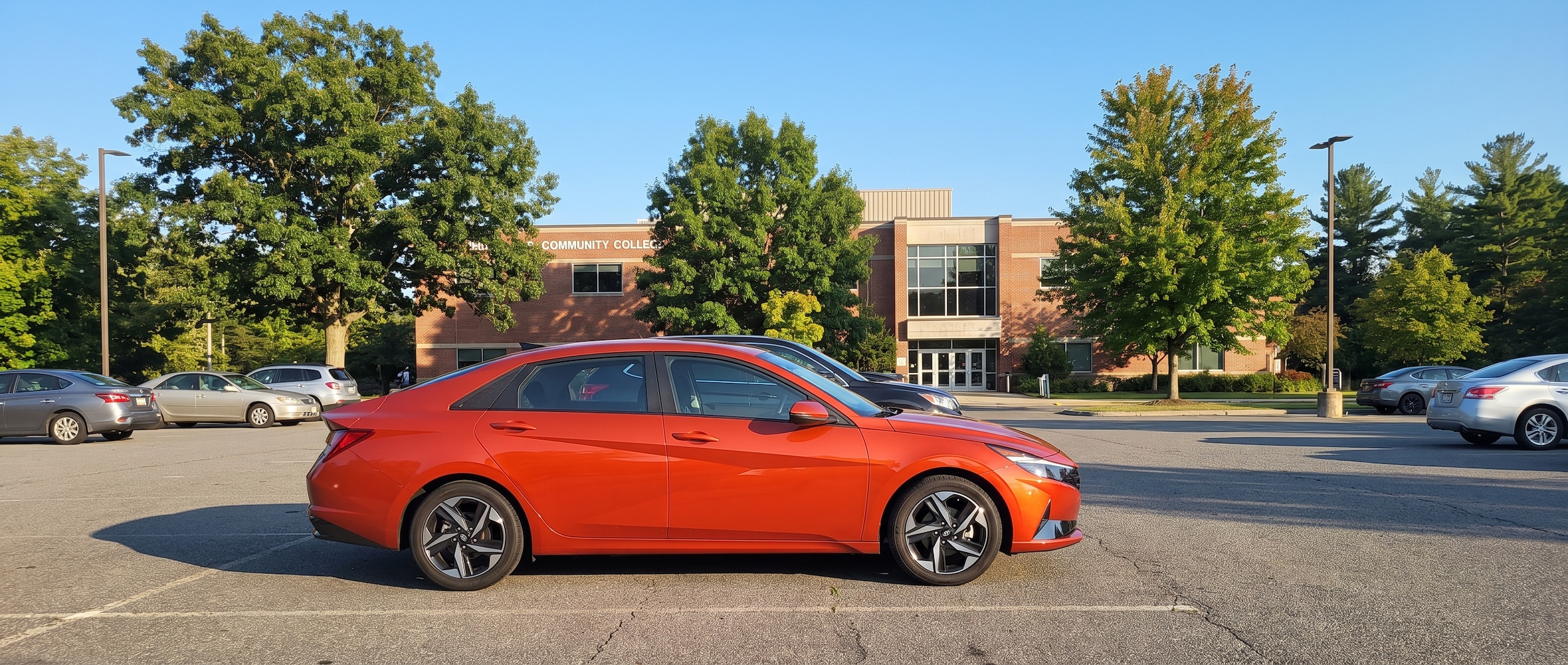
For most Vol State students commuting along Nashville Pike, the 2026 Hyundai Elantra is the one we'd point to first. In gas form it delivers an EPA-estimated 35 mpg combined, and up to 54 mpg combined as a hybrid. It slots into a standard campus parking spot without drama, and every trim ships with forward collision warning, automatic emergency braking, and blind-spot monitors as standard equipment.
Still, the right fit depends on what your student life actually looks like, and two other Hyundais belong in the conversation. Here's how we'd sort it out.
Which Hyundai Fits Which Vol State Student Scenario?
The best Hyundai depends on your commute, and the Gallatin campus sits at 1480 Nashville Pike, about nine miles from our lot in Hendersonville, so students driving in from Hendersonville, Portland, or White House are covering real daily miles. Fuel economy isn't theoretical for them. You feel it at the pump.
We built this table around the decisions students actually wrestle with. How much car do I need? How important is parking? Will the cargo hold my stuff?
| Student Type | Best Fit | Why It Works | The Real Tradeoff |
|---|---|---|---|
| Solo commuter, tight budget | Elantra (gas SE) | EPA 31 city / 40 hwy; compact sedan footprint; full SmartSense suite standard | Smaller trunk (14.2 cu ft) than an SUV |
| Fuel-conscious commuter | Elantra Hybrid (Blue) | EPA 51 city / 58 hwy / 54 combined; NHTSA 5-star overall | FWD only; no AWD option on any Elantra |
| First-car buyer who parks everywhere | Venue | 159.1-inch length; 8-inch touchscreen with wireless CarPlay; 121 hp is enough for campus life | Least cargo room (18.7 cu ft); FWD only |
| Student hauling gear or moving dorms | Kona | 25.5 cu ft of cargo; 171.3 inches long; AWD available; 12.3-inch touchscreen standard | Slightly less efficient with turbo engine (26 mpg combined); larger footprint |
| Student who drives Nashville runs on weekends | Elantra Hybrid | 54 mpg means a lot less cash at the pump on longer drives; quiet highway ride | Modest trunk at 14.2 cu ft; no cargo flexibility |
One honest tradeoff runs across all of them. Hyundai's smaller models are front-wheel drive only unless you step up to the Kona, where AWD is available. Tennessee doesn't see serious winter often, but when ice hits the Cumberland Plateau region, AWD gives you options the others don't.
What Makes the Elantra Specifically Worth Considering Here?
The commute is what tips the Elantra to the top for students driving Nashville Pike into Gallatin, where the gas SE returns an EPA-estimated 31 miles per gallon in the city and 40 on the highway, and the Elantra Hybrid Blue pushes that to 51 city and 58 highway per the EPA. Over a full semester of daily drives, that gap adds up.
The Venue and the Kona are worth serious thought too, but the Elantra earns its place at the top of this list because it's the only model in the Hyundai lineup that gives you sedan compactness, a tech-loaded cabin (available dual 10.25-inch screens), and a hybrid option all under one nameplate. The 2026 Elantra also earned a Top Safety Pick designation from the Insurance Institute for Highway Safety. For a parent co-signing a loan or just a student who's never owned a car solo before, that designation carries weight.
If your budget is tighter and you're only commuting to campus and back, the gas Elantra SE is the smarter call over the hybrid. We'll say it plainly. The hybrid makes more sense the more you drive, since shorter trips don't give the system as much room to recapture energy.
- The 2026 Venue is 159.1 inches long (the shortest Hyundai SUV), which makes it genuinely easier to fit in tight campus lots
- The 2026 Kona has 25.5 cubic feet of cargo behind the rear seats, more than twice the Elantra's sedan trunk
- Every 2026 Hyundai listed here ships with forward collision warning and automatic emergency braking as standard
- The Elantra N (the performance variant) gets 24 mpg combined with the manual per the EPA. Great car, wrong tool for this job.
- NHTSA gave the 2026 Elantra Hybrid an overall five-star safety rating
Is Financing a New Hyundai Realistic for a Student?
Financing a new Hyundai as a student is realistic for some and a stretch for others, and the outcome depends entirely on whether you have a co-signer, how much you're putting down, and whether you're buying versus leasing. A fair question before you shop is how those pieces fit together for your situation.
What we'd tell any Vol State student coming in is simple. Don't let the sticker drive the entire decision. Our financing page lets you see what options exist before you step foot on the lot, and running the numbers first makes things faster and less stressful when you get here.
One thing we'd push back on is the "just buy used" advice that gets repeated without context. A well-priced certified pre-owned Hyundai can absolutely make sense. But buying new means starting with a vehicle at zero miles and its full service history ahead of you, and that predictability matters for a student who can't absorb an unexpected repair bill. We're not saying new is always right. We're saying it's worth comparing both paths before you decide.
August is a good time to look, by the way. The fall semester start at Vol State means you'll want a car figured out before classes ramp up, and we tend to see solid availability on Elantra and Venue trims heading into the season.
Frequently Asked Questions
Can I fit everything for a semester in a Hyundai Elantra?
The 2026 Elantra sedan has 14.2 cubic feet of trunk space, which is smaller than what you'd get in the Venue (18.7 cu ft) or the Kona (25.5 cu ft). For move-in day with full dorm gear, it's tight but manageable if you pack smart. If you're regularly hauling a lot (camping gear, a part-time job that requires equipment, or frequent road trips), we'd point you toward the Kona instead.
Does the 2026 Hyundai Kona come with AWD?
Yes. The Kona offers Hyundai's HTRAC all-wheel drive as an available option, making it the only model in this student-oriented lineup that does. The Venue and all Elantra variants are front-wheel drive only. For Tennessee driving, FWD handles most situations fine. If you're living somewhere the ice gets serious in winter or you're making regular runs up toward the Cumberland Plateau, AWD on the Kona is a meaningful upgrade.
Is the Elantra Hybrid worth the extra cost over the gas Elantra for a student?
It depends on how many miles you drive. The EPA rates the Elantra Hybrid Blue at 54 mpg combined versus 35 mpg combined for the gas Elantra SE. If you're commuting 20 or more miles round-trip to Vol State each day, that efficiency gap adds up over a semester. If you're mostly driving short local trips in Hendersonville or Gallatin, the hybrid system gets less of a chance to do its thing, and the gas Elantra becomes the more straightforward value.


