

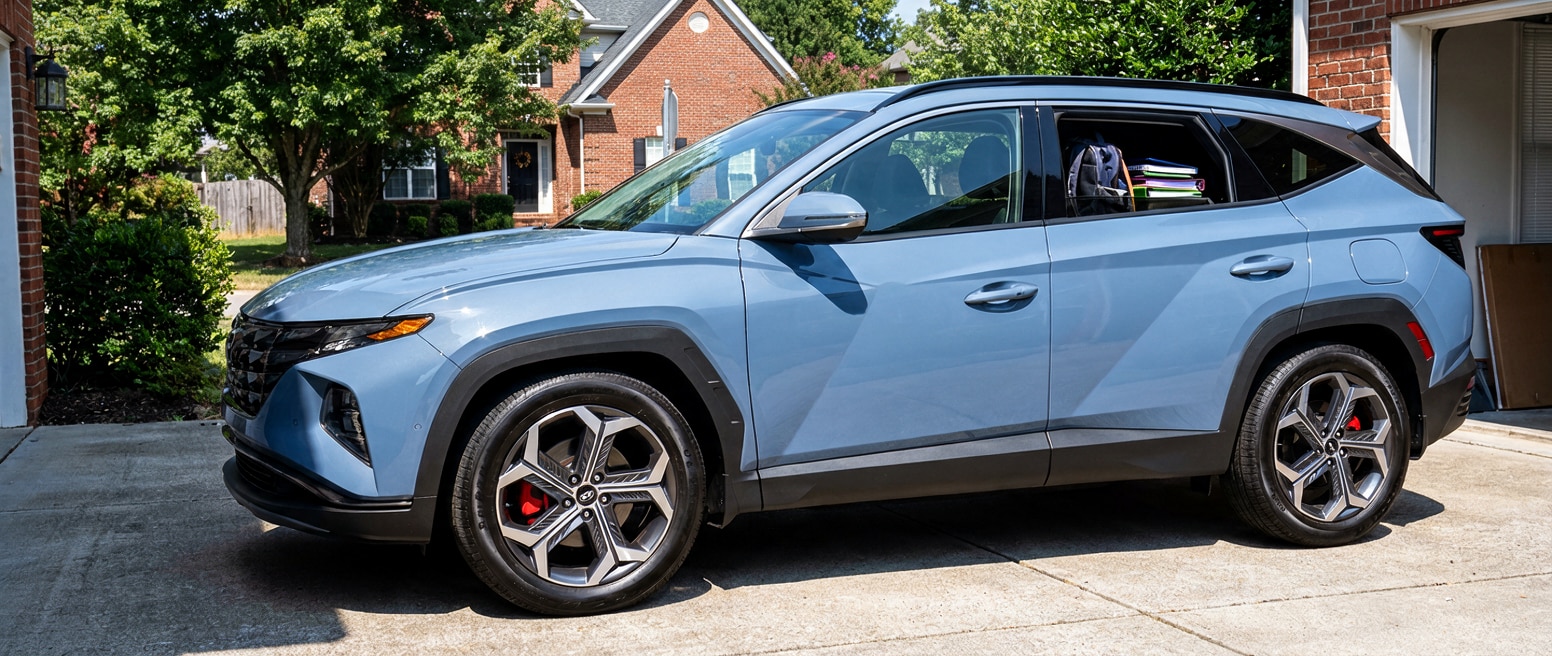
Sumner County Schools started back on August 10, so the easy summer commute is already behind us. If you drive anywhere near Old Shackle Island Road, Vietnam Veterans Boulevard, or the school corridors feeding Hendersonville High and Beech High, you can feel the difference. The stop-and-go miles are back. They're harder on your brake pads than highway miles, and running on pads you've been meaning to check is a rough way to start the season.
Book a brake inspection at Hallmark Hyundai Hendersonville and get ahead of it before fall layers on top of what's already here.
Below is how a brake service day actually unfolds, from your driveway to our service drive and back, so you know what to expect and what to watch for before you even arrive.
What's the Route? Your Brake Service Day Plan
| Stop | Location | What Happens | What to Note |
|---|---|---|---|
| 1 | Your driveway | Quick self-check before driving in | Listen for squealing, feel the pedal, check for pull under braking |
| 2 | Hallmark Hyundai service drive (1198 W Main St) | Hyundai multi-point inspection of the full brake system | Technician measures pad thickness, checks rotors, fluid, calipers, and lines |
| 3 | Waiting area or arrange a ride | Review findings with your service advisor | Ask specifically about rotor condition, not just pad depth |
| 4 | Back on the road | Post-service road test included | Our team verifies pedal feel and stopping response before handing back the keys |
Stop 1: Two Minutes in Your Driveway
You can catch most brake trouble in your own driveway before you ever drive in, and it takes about two minutes with no tools at all. None of this replaces a real inspection, but it does tell you whether you're looking at a same-day problem or something you can schedule around.
Squeeze the pedal with the car in park. It should build pressure right away and feel firm the moment you press. A pedal that sinks toward the floor or pulses under your foot points to a hydraulic issue, maybe brake fluid contamination or air in the lines. Get that looked at the same day rather than waiting it out.
Listen on your first cold stop of the day. A high-pitched squeal when you brake is often the wear indicator doing exactly what it was designed to do. Brake pads come factory-equipped with a small metal tab that contacts the rotor and squeals when the friction material approaches its service limit. Intentional. Grinding is different. Grinding means metal is already on metal, and you're past the warning.
Check whether the car pulls left or right under braking. A steady pull usually points to a stuck caliper or uneven pad wear on one axle. You won't miss it. Treat it as a safety issue and get it checked.
Hyundai Tucson owners and Hyundai Palisade owners, take note. Heavier vehicles in stop-and-go commute patterns wear pads faster than lighter cars that spend most miles at highway speed. It all shapes how often you'll really need to schedule service. Simple physics.
Stop 2: What Our Service Team Checks at the Drive
At the service drive, everything you flagged in the driveway turns into a real measurement, and the Hyundai multi-point inspection covers the full brake system at every visit. It's thorough, though it won't tell you what to prioritize until you talk it through with your advisor. Technicians measure pad thickness, check the rotor surface, test brake fluid level and quality, verify caliper and hardware function, and inspect the brake lines, hoses, and parking brake.
Pad thickness has a real number attached. When friction material approaches 2 to 3 millimeters, the wear indicator is already signaling that it's time. Pushing past that point risks scoring the rotor surface, which turns a straightforward pad replacement into a more involved and more expensive repair.
Brake fluid is the detail that's easy to overlook. It absorbs moisture over time, and that moisture lowers its boiling point. Stop-and-go driving in August heat stresses the hydraulic system far more than open-road miles do. The TDOT widening project on Old Shackle Island Road runs at 12,900 vehicles per day through construction delays. Add active school zones and the peak-hour bottleneck merging onto Vietnam Veterans Boulevard, and you've got a commute that's hard on brake fluid. Its condition belongs in the conversation.
Schedule Your Brake Inspection
Stop 3: Reading the Results with Your Advisor
When the inspection comes back, don't just skim the printout and hand over the clipboard, because the number that really sets your timeline is the rotor condition. Pad depth gets most of the attention, though the rotors are what turn a simple job into a bigger one.
What actually decides your day, the pads or the rotors? Usually the rotors, since a rotor has a minimum thickness specification, and one at or below that spec can't be resurfaced. It needs to be replaced with the pads. Knowing this upfront is the difference between planning a service visit and getting surprised by a larger job. Our team walks through the full brake picture, not just the pad measurement, so you can separate what's urgent now from what can wait.
We frame the triage for customers along these lines.
- Pads above 4mm with no symptoms: monitor at the next oil change
- Pads between 2 and 4mm: plan the service within the next 1,000 to 2,000 miles
- Pads at or below 2mm: service now, not next month
- Rotor surface with deep scoring or heat damage: replace alongside the pads
- Brake fluid that's dark or moisture-contaminated: flush now regardless of pad depth
Hyundai Santa Fe drivers and Tucson Hybrid owners have one wrinkle to note. The Tucson Hybrid uses regenerative braking to recapture energy during deceleration, which trims friction brake load at lower speeds and can extend pad life compared to a conventional drivetrain. Even so, hybrid rotors can develop surface rust and uneven wear from infrequent friction-braking events. The inspection runs on the same schedule.
Stop 4: Tweak It to Your Crew
Not every household in Hendersonville runs the same brake timeline, so the right interval depends on how and where you drive. The standard recommendation is a fine starting point, though your own pattern can pull it earlier or push it later.
Heavy school-run households do two drop-offs through active school zones, Old Shackle Island construction detours, and the Vietnam Veterans Boulevard merge every single morning. You're piling up stop-and-go miles faster than the odometer suggests. A brake check every 10,000 to 12,000 miles fits that pattern better than the standard recommendation.
Primarily highway commuters run Vietnam Veterans Boulevard straight into Nashville with little surface-street time, and your pads will last longer for it. The annual inspection still matters, though. Rotors can corrode from infrequent friction braking, and brake fluid degrades on a time schedule as much as a mileage one.
Households with new teen drivers are adding miles to the family cars this school year, and less-experienced braking habits do speed up pad wear. It isn't a criticism. Just a factor worth building into your service calendar.
The tradeoff is fair to name. Brake service isn't free, and if your pads are genuinely in good shape, the inspection confirms it and costs you an afternoon. There's the downside. The upside is knowing exactly where you stand before school traffic, fall rain, and colder months stack on each other. Our team has watched the pattern repeat, where drivers push brake service from one oil change to the next until grinding starts, and a pad replacement becomes a rotor replacement. The inspection is the inexpensive version of that story.
By the Hallmark Hyundai Hendersonville Team | August 2026


